
What Is a JLR TCU? Telematics Unit Guide
The Short Answer
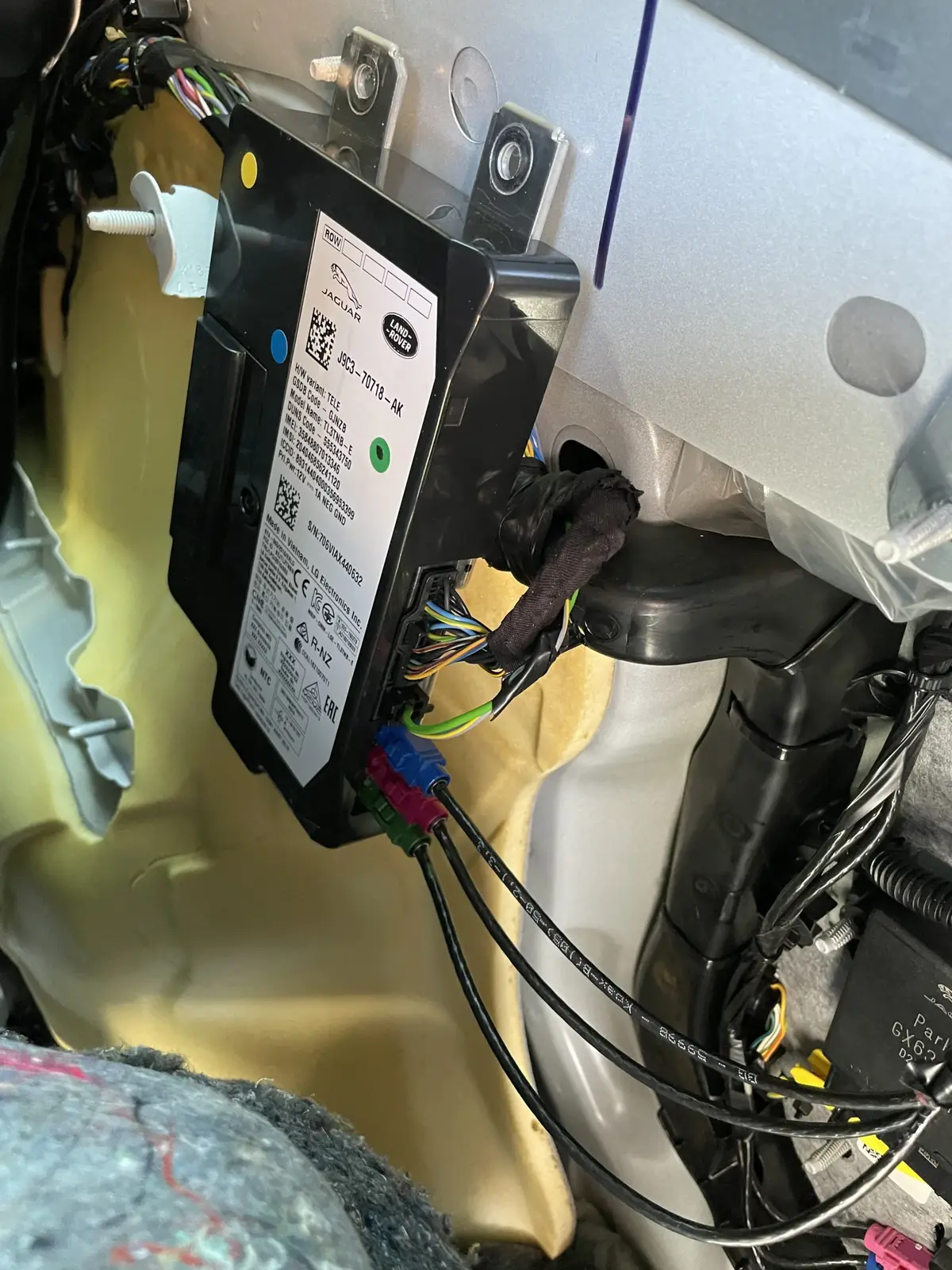
A JLR TCU — Telematics Control Unit — is the vehicle's dedicated modem and GPS hub in one module: it carries an embedded SIM that connects the car to the cellular network, enabling the InControl remote app, SOS emergency calls, stolen vehicle tracking, live traffic and the in-car Wi-Fi hotspot. When it fails, every connected feature fails with it.
This guide explains what the module does, how it fits into the vehicle's electronics, how it fails, and what the repair options look like when it does.
What the TCU Actually Does
Five feature families hang off the TCU. The InControl Remote app — lock, unlock, precondition, vehicle status — talks to the car through it. SOS eCall places automatic emergency calls with GPS location after a serious collision. Stolen vehicle tracking reports position to the authorities. Live services stream traffic and content. The Wi-Fi hotspot shares its data connection with passengers.
That concentration of function is what makes the module matter. A faulty TCU does not just knock out one convenience feature — it severs the vehicle's entire connection to the outside world, which is why owners notice its failure immediately even if they have never heard the module's name.
How It Fits the Vehicle's Electronics
The TCU does not work alone: it sits on the vehicle network alongside the infotainment system — Pivi Pro or InControl Touch Pro — and the BCM, exchanging data constantly. That integration is why TCU faults ripple outward into infotainment and app behaviour, and why diagnosis starts with a full network scan rather than the telematics unit alone.
The practical consequence: a "dead app" complaint can be the TCU, but it can also be infotainment software, antenna connections, or account provisioning on the JLR side. Proper diagnosis interrogates the whole chain before any module is condemned — the scan, not the symptom, makes the call.
How the TCU Fails
The classic TCU failure is its internal backup battery: a small non-serviceable cell that keeps eCall alive when vehicle power is cut, which degrades with age and triggers the SOS System Inactive warning. Beyond that, water ingress, connector corrosion and internal electronic faults account for most of the remainder — all confirmed by scan, not guesswork.
The battery failure is so common it has its own dedicated coverage: see the JLR TCU backup battery failure guide for the mechanism, and the SOS System Inactive fix for what the warning means. The broader symptom set is mapped in signs of a failing JLR TCU.
Replacement: Why It Must Be New
The TCU is a security module that binds permanently to the first VIN it is programmed to — a used unit cannot be reset for your vehicle, and its internal battery is already aged. Replacement therefore means a new genuine module, programmed once, which restores every connected feature with warranty and a known service life ahead of it.
This VIN-lock reality surprises many owners and is the single biggest trap in TCU replacement: the salvage market is full of cheap units that can never work in your car. Our used vs new JLR TCU comparison lays out the full argument, and the JLR TCU replacement guide covers the correct procedure end to end.
A brief note on subscriptions, because they confuse the diagnosis picture. InControl connectivity depends both on the TCU hardware and on an active subscription or service status on the JLR account side. A vehicle with a perfectly healthy module but a lapsed subscription behaves — from the driver's seat — much like a vehicle with a dead TCU: the app stops reaching the car and live services disappear. Checking account status is free and takes minutes, which is why it belongs at the start of every telematics diagnosis, before any hardware is suspected.
The cellular transition in the background matters too. Older TCUs were built around 3G networks that are being switched off in market after market, and a module can be electronically healthy yet practically deaf where its network generation has been retired. For owners of affected vehicles, that shifts the question from repair to upgrade: a later-generation unit restores the connectivity the network itself removed. It is one more reason telematics complaints deserve proper diagnosis rather than assumptions — the same symptom can mean a dead battery inside the module, a lapsed account, or a retired network.
For workshops, telematics faults are a steady, under-served revenue line. Dealers quote module replacement at dealer rates; general garages often cannot complete the programming at all. A specialist who can confirm the fault remotely, supply the correct new unit for the VIN, and complete the programming — locally or over SX-LINK — takes a job both groups struggle with. The workflow is short, the parts decision is binary, and the customer relief at getting their app and SOS safety net back is immediate.
Looking ahead, the module's role only grows. Connected features, over-the-air updates and remote diagnostics all ride the same cellular pipe, which means the TCU is quietly becoming the vehicle's front door to the digital world. A healthy TCU is no longer about convenience features alone; it is the prerequisite for how these vehicles will be serviced, updated and supported for the rest of their lives. Owners who treat telematics faults as optional extras are deferring a component that the vehicle's entire connected future depends on — better to understand it now, while the repair is still a simple module swap. And for the workshops reading: every deferred TCU in your local fleet is a future booking.
Frequently Asked Questions
Where is the TCU located in the vehicle? Location varies by model — commonly behind the rear seat area, in the boot side panels, or under interior trim. The exact position and access procedure is model-specific; the service documentation for your VIN gives the precise location before any trim comes off.
Why did my InControl app suddenly stop working? The usual suspects are TCU failure, an expired or lapsed InControl subscription, infotainment software faults, or cellular network changes. A diagnostic session reads the TCU's state directly and separates module failure from service and account causes.
What does the SOS System Inactive warning mean? It means the eCall system cannot guarantee an emergency call — most often because the TCU's internal backup battery has degraded beyond usable capacity. The vehicle still drives normally, but the safety net is gone until the module is addressed.
Does the TCU affect Pivi Pro or InControl Touch Pro? Indirectly, yes. Live traffic, connected media and online navigation features flow through the TCU's data connection, so a failed module degrades the infotainment experience even though the head unit itself is healthy.
Can a TCU be repaired rather than replaced? Component-level repair is not a practical path — the internal battery is non-serviceable and the module is sealed. Given the VIN-lock rules, the reliable repair is a new genuine unit programmed to the vehicle once.
Restore Your Car's Connection
SX-Tool supplies genuine JLR telematics modules matched to your VIN and supports programming remotely or through partner specialists. If your InControl app, SOS system or live services have gone dark, contact the SX-Tool team for diagnosis and a fixed-price repair path.