
JLR TCU Replacement Guide: Cost, Programming
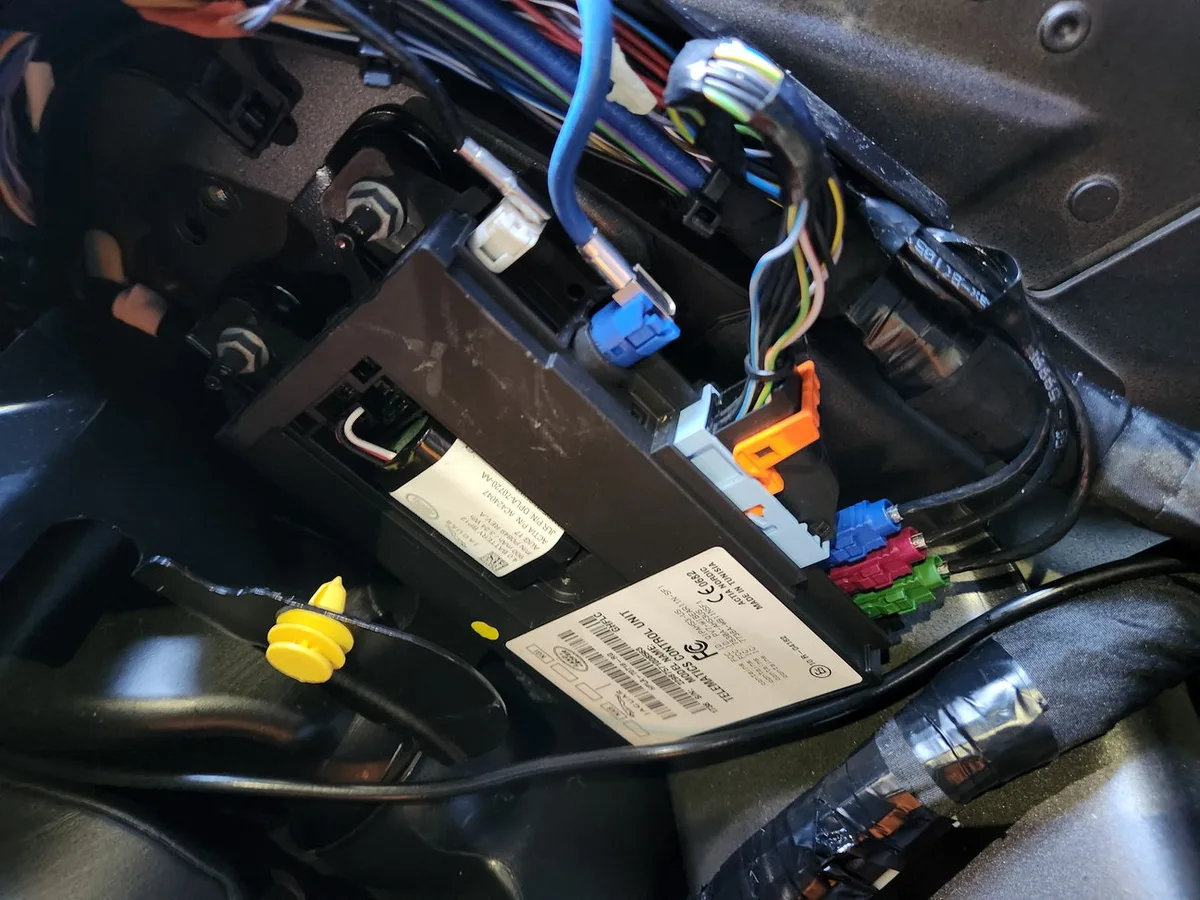
The Short Answer
A JLR TCU replacement is a straightforward module swap with one often-missed twist: the new unit must be provisioned to the vehicle and to JLR's InControl systems, which on 2017-onwards vehicles means an online TOPIx Cloud session. Physically the TCU is accessible (behind trim or under the loadspace floor depending on model); the software commissioning is the half of the job that decides whether SOS and connected services actually work afterwards. A used TCU is a legitimate, much cheaper route — provided it is correctly provisioned and its backup battery is checked.
This guide covers identification, the swap, provisioning, and costs.
Which TCU Does Your Vehicle Have?
JLR has used several TCU generations across the InControl era — identify yours by VIN before ordering anything, because generations are not interchangeable. The emergency-call function they share follows the same principles as the European eCall system, but the hardware differs substantially between generations.
Broadly:
- InControl Touch / early ICTP vehicles (~2015–2018). Earlier telematics units, SDD-era diagnostics, 2G/3G-era connectivity on the oldest.
- ICTP / InControl Touch Pro (2016–2020). The mainstream unit behind most SOS System Inactive cases today; backup battery now at end of life across the fleet.
- Pivi Pro / DoIP era (2020 on). Current TCU integrated with the SOTA update system; provisioning is fully online via TOPIx Cloud.
Model pages with platform notes: Defender L663, Range Rover L460, Velar. Not sure which system you have? The TCU signs guide helps you identify it by symptom.
Confirm Before You Replace
Replace a TCU only after the cheaper impostors are eliminated — the backup battery, the 12 V battery and the subscription state together account for a large share of "dead TCU" verdicts.
- Full scan: TCU present on the network? Internal fault DTCs or backup-battery codes?
- Check/replace the backup battery first if symptoms match — see the backup battery guide.
- Verify InControl subscription and account status.
- Rule out antenna and wiring faults (water ingress in roof aerials is a known pattern on some models).
If the module itself is proven dead, proceed.
The Physical Swap
The TCU location varies by model — behind boot/loadspace side trim on most SUVs, under the rear floor on others — but the exchange itself is conventional trim-and-connectors work.
- Power down properly. Ignition off, key away, let the vehicle sleep (15+ minutes). Disconnect the 12 V battery negative if the procedure calls for it.
- Remove trim to expose the TCU. Photograph connector orientation.
- Disconnect the main connector, antenna leads (note colour coding) and the backup battery connector.
- Swap the module. If reusing the backup battery, test it first — or fit a new one while you are in there. It is cheap insurance.
- Reassemble, reconnect 12 V, and proceed to provisioning before declaring victory: at this stage the module is fitted but not yet alive on JLR's systems.
Provisioning: The Half Everyone Forgets
A replaced TCU must be provisioned — registered to the vehicle's VIN and activated on the InControl backend — or SOS, the app and remote services will not work despite perfect hardware.
- 2017-onwards (DoIP era). Provisioning runs through Pathfinder with an online TOPIx Cloud session. The module is configured, software-checked and registered server-side in one connected routine.
- Pre-2017 (SDD era). Provisioning via SDD's module replacement routine, plus account-side activation where the platform requires it.
After provisioning, verify with the engine running: SOS self-test clear at start-up, vehicle appearing in the InControl app within a few hours, and a SOTA check completing. For used modules, the donor vehicle's registration must first be cleared — engineering tooling handles the reset; see our used module programming guide.
New vs Used: Costs and Trade-Offs
The cost gap between new and used TCUs is large enough that used is the default choice for out-of-warranty vehicles — with provisioning done properly, function is identical.
| Route | Cost shape | Notes |
|---|---|---|
| New TCU via dealer, fitted + provisioned | High (four figures in many markets) | Simplest, warranty-backed |
| Used TCU + provisioning | Low–mid | Match part number/generation by VIN; clear donor registration |
| TCU repair / recovery flash | Low–mid | For update-bricked or board-level faults — module repair |
| Backup battery only | Low | If the module is healthy — check this first |
Remote provisioning via SX-LINK removes the dealer from the equation entirely for workshops and owners outside warranty.
Sourcing a Replacement TCU
TCU sourcing is a part-number exercise, not a description exercise — the same car can carry different hardware depending on build date and market, and the breaker's shelf label "Range Rover TCU" means nothing.
Get the part number from the unit itself or from the VIN's build data, match it exactly, and confirm the generation before purchase. Used units from documented breakers are the normal supply route; verify the seller will accept a return if the part number turns out wrong. On arrival, test or replace the backup battery before fitting — the backup battery guide explains why a used module with a dying cell pack is a comeback in a box.
After Replacement: What to Test
Provisioning is not finished until the connected services are proven working end to end — a module that programs cleanly but never phones home has not been fixed, just fitted.
The verification set: SOS self-test clear at three consecutive start-ups; vehicle visible in the InControl app within a few hours; remote lock/unlock responding; SOTA check completing without error; and a final full-module scan with no telematics DTCs. For workshops handing the car back, that app-visibility check is the one customers notice — do it before collection, not after the phone call.
Will my InControl subscription transfer to a replacement TCU? Yes — the subscription attaches to the vehicle and account, not the physical module. Provisioning re-registers the new unit under the same account. Where the subscription itself has lapsed, renewal is a separate account-side step that provisioning cannot perform for you.
Why TCU Replacements Are Rising Now
If it feels like every second InControl-era JLR suddenly needs telematics work, that observation is accurate — and it is demographics, not a new defect.
The 2015–2019 fleet is passing through the age where the backup battery reaches end of life, early TCU hardware revisions are failing in numbers, and 2G/3G network switch-offs in various markets are stranding the oldest units' connectivity entirely. Three waves arriving at once means workshops see telematics complaints weekly that they saw annually five years ago. The practical consequence: TCU diagnosis and provisioning capability has shifted from specialist niche to standard workshop requirement for anyone serving the InControl-era parc — and the provisioning step is where independent workshops most often need support, because it is the step that requires online access.
Frequently Asked Questions
Where is the TCU located on a Range Rover? Location varies by model and generation — commonly behind the loadspace side trim on Range Rover and Sport, and under the rear floor area on some others. Identify the exact position by VIN in the workshop manual before ordering trim tools; getting this wrong costs an afternoon.
Does a replacement TCU need programming? Yes, always. The module must be provisioned to the vehicle's VIN and activated on JLR's InControl backend — via Pathfinder/TOPIx Cloud on 2017-onwards vehicles, or SDD-era routines on older ones. Without provisioning, SOS and connected services stay dead even with perfect hardware.
Can I fit a used TCU? Yes — match the part number and generation by VIN, have the donor vehicle's registration cleared with engineering tooling, then provision it to your vehicle as normal. Also test or replace its backup battery while the module is out; a used TCU with a dying backup battery is a comeback waiting to happen.
How much does JLR TCU replacement cost? Dealer new-module replacement typically runs into four figures with parts and programming. A used module plus remote provisioning, or module-level repair, usually lands far lower. The cheapest fix of all is the backup battery alone — which is why diagnosis order matters.
Will a new TCU fix my SOS System Inactive warning? Only if the module itself is the fault — the same warning is more commonly caused by the backup battery, and sometimes by subscription or antenna issues. Confirm with a scan first; our SOS fix guide walks the decision tree.
What is the difference between programming and provisioning a TCU? Programming writes the module's software and vehicle configuration; provisioning registers it on JLR's backend so InControl, SOS and remote services actually function. A TCU can be perfectly programmed and still show dead connected services because provisioning never happened — which is why the post-replacement test list above ends with the app, not the scan tool.
Provisioning Without the Dealer
SX-Tool provisions replacement TCUs worldwide via SX-LINK remote sessions, and supplies the diagnostic tooling chain for workshops doing this work regularly. Book at sx-tool.com/en/shop/ or read the procedures at kb.sx-tool.com.