
Genuine vs Used JLR BECM: What Owners Must Know
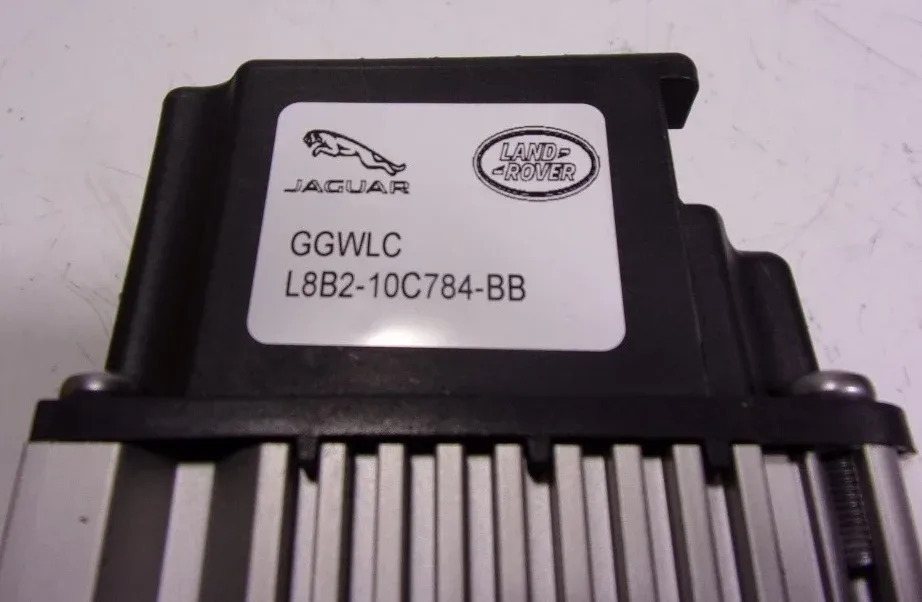
The Short Answer
A Used JLR BECM fitted as-supplied will not work: the module is permanently locked to its donor vehicle's VIN, and standard diagnostic tools reject it. The legitimate paths are a new genuine module, repair of your own unit, or a used BECM professionally virginised and commissioned by a specialist.
When a Battery Energy Control Module fails on a P400e or P300e, the new-part quote sends owners searching for salvage-yard alternatives. The listings look plausible: same part number, low mileage donor, fraction of the price. What the listings do not mention is that the module is electronically welded to its donor vehicle — and what it takes to change that.
This guide explains the VIN-lock reality, the other problems with used modules, and the routes that genuinely work. For the module's function and failure modes, start with what a JLR BECM is.
The VIN-Lock Problem Explained
During its first programming, a BECM is bound to the host vehicle's VIN and immobiliser data as part of JLR's security architecture. From that moment, the module serves that vehicle alone. Fitted elsewhere as-is, it fails the security check, refuses to communicate correctly, and cannot be programmed with dealer-level tools.
This is not a software preference — it is the design. The BECM sits inside the same security perimeter as the BCM, KVM and immobiliser chain, and the binding exists precisely so that modules cannot be moved between vehicles without authorisation.
The practical consequence: a used BECM from a breaker is, as supplied, an electronic paperweight for your car. You can bolt it in perfectly and the vehicle will still reject it at the programming step. Owners discover this after paying for the part and the fitting — the most expensive way to learn it.
The Other Problems With Salvage Modules
Even setting the VIN lock aside, a salvage BECM carries the donor vehicle's unknown history: possible flood or crash damage, an unknown remaining service life, and a strong chance it is the same age-related failure you are trying to fix. You are often buying someone else's problem.
Consider what you cannot see:
- Donor history. Flood vehicles and crash write-offs feed the salvage market, and neither event is kind to high-voltage electronics.
- Age-related wear. BECMs commonly fail from contactor wear and component fatigue — a same-age donor module is statistically near the same failure.
- No testing regime. Salvage parts are removed and sold, not validated under load. "Worked when removed" is untestable marketing.
The failure patterns that kill these modules are documented in inside a failing JLR BECM — note how few of them are visible from outside the case. And a marginal module does not just fail again; left unresolved it can take the battery pack with it, as how a failed BECM damages the HV battery explains.
Path One: New Genuine Module
A new genuine BECM arrives in a virgin state — never locked to any vehicle — carries the latest hardware and software revisions, and comes with a manufacturer's warranty. Programmed to your VIN with JLR-level tooling, it is the zero-risk repair at the highest price.
This is the route main dealers take by default, and for good reasons:
- Virgin state. No security binding to overcome; programming proceeds exactly as JLR intended.
- Current revision. Supersessions mean the new module often includes fixes for the weaknesses that killed the old one.
- Warranty. Manufacturer-backed cover on a safety-critical part.
The cost is real — the module itself is typically a four-figure part, with programming on top. Our Range Rover BECM replacement cost guide breaks down where the money goes and where it can legitimately be reduced.
Path Two: Repair Your Own Module
Many BECM failures — worn contactors, board-level component faults — are repairable by specialists who open the module, replace the failed parts and validate it under load. Your own module keeps its VIN binding, so no virginisation or security work is needed at all.
This route has a quiet advantage nobody advertises: because the module returns to the same vehicle it came from, the security architecture is untouched. No virginisation, no commissioning fight — the repaired module slots back into its own car.
Professional repair typically costs a fraction of a new module, and reputable specialists warranty the work. The distinction from marketplace "refurbished" units matters — traceable repair with testing versus anonymous salvage with a sticker — and our comparison of genuine versus refurbished Land Rover BECMs covers it in detail. Our own module repair service handles BECM repair exactly this way.
Path Three: Properly Commissioned Used Module
A used BECM can be made to work — but only through specialist virginisation, where the donor VIN and security data are erased at memory level with dedicated equipment, after which the module programs like a new one. This is skilled lab work, not a scan-tool function.
The legitimate sequence looks like this:
- Source a sound donor. Correct part number for your VIN, verified history where possible — the BECM part number guide explains identification.
- Virginise professionally. Memory-level erasure of the donor binding, performed by specialists with chip-level equipment.
- Fit and program. The virginised module is programmed to your VIN with SDD or Pathfinder-era tooling as appropriate.
The full commissioning workflow is described in programming used JLR modules. Done properly, this route sits between repair and new-part pricing. Done casually — or skipped entirely — it is the salvage-yard trap all over again.
Frequently Asked Questions
Can any diagnostic tool unlock a used BECM? No. The VIN binding lives in protected memory, and no standard or dealer-level diagnostic tool can clear it — that is the point of the security design. Virginisation requires chip-level equipment and specialist knowledge. Anyone claiming to unlock a BECM with a scan tool alone is misdescribing what they can do.
Is a used BECM ever the right choice? Yes, in one specific form: a correctly identified donor module, professionally virginised and commissioned to your vehicle by a specialist. In that form it is a legitimate, cost-saving repair. In every other form — as-supplied salvage, marketplace "tested" units — it is money spent on a module that will never work in your car.
Why did my mechanic say the used module was rejected? Because the vehicle's security system checked the module's stored VIN against the car's own and refused to continue. The programming session fails at that point regardless of how perfectly the module was fitted. Nothing is wrong with your vehicle — the module simply still belongs, electronically, to its donor.
How do I choose between repair and replacement? Let the diagnosis decide. Contactor wear and defined board faults repair well; catastrophic multi-stage damage may not. A specialist assessment of your own module is the first step — it costs little, preserves every option, and tells you which path the failure actually allows.
What should this repair cost in total? A new genuine module with programming is a four-figure job in most markets; specialist repair or a commissioned used module typically comes in significantly lower. Exact figures vary by model, region and failure mode — which is why we quote by VIN and diagnosis rather than from a generic price list.
Get a Specialist Verdict on Your BECM
SX-Tool diagnoses BECM faults remotely, repairs modules in-house, commissions used units properly and supplies verified new parts — the full menu, chosen by diagnosis rather than habit. Start with our module repair service or send your VIN via the contact page.